

Outdoor entertainment gear has a rough life in Australia. A north-facing patio in Perth or Brisbane can bake past 50°C on the surface in January, UV chews through plastics and cable sheathing, a summer storm arrives sideways, and if you're near the coast, salt air quietly corrodes everything it touches. Plenty of people drag an indoor TV outside for the cricket, get away with it for a season, then wonder why the panel has a hazy patch and the speaker grille has gone green.
The good news is that the decision is fairly simple once you stop shopping by brand and start shopping by where the gear will physically sit. Below is how to work that out, plus the electrical bits that genuinely need a licensed sparky.
Start With Where the Sun Actually Hits
Before you look at a single product, spend a weekend watching your outdoor area. Note three things:
- When direct sun lands on the wall or ceiling you're planning to mount to. Late-afternoon western sun is the killer.
- Whether wind-driven rain reaches that spot. A deep alfresco with a solid roof and two walls is a completely different environment to a pergola with a shade sail.
- How much ambient light is on the viewing surface at the times you'll actually watch. Sunday afternoon footy is a different problem to Friday night movies.
That gives you a category. A fully covered alfresco with power already run is a "partial sun" or even "shade" zone and opens up affordable options. An exposed deck is a "full sun" zone and means a purpose-built outdoor TV or nothing.
The rule of thumb worth remembering: indoor TVs and soundbars are not rated for outdoor use, and using them outdoors usually voids the warranty even under a roof. Condensation inside the panel from overnight temperature swings is the common failure, and it isn't covered.
Outdoor TVs: What IP Ratings and Nits Actually Mean
Two numbers matter.
Brightness, measured in nits. A typical indoor TV sits somewhere around 300–600 nits of sustained full-screen brightness [VERIFY]. That is fine in a dim lounge room and washed out on a bright patio. Purpose-built outdoor TVs designed for partial sun are commonly quoted in the 700–1,500 nit range, and full-sun models push well beyond that [VERIFY]. Full-sun models are dramatically more expensive — often several thousand dollars in AUD [VERIFY] — because they need brightness, anti-glare coatings and active cooling.
Ingress protection, the IP rating. IP55 is a reasonable baseline for a covered area; IP65 and above suits genuinely exposed positions. The first digit is dust, the second is water. Also check the stated operating temperature range — this matters more in Australia than in the northern-hemisphere marketing material, and some outdoor TVs are only rated to around 50°C ambient [VERIFY].
If your "outdoor" area is really a covered alfresco used a few times a month, a portable, battery-powered screen you wheel out and bring back inside is a far better value proposition than a fixed outdoor panel. It sidesteps the weather problem entirely.
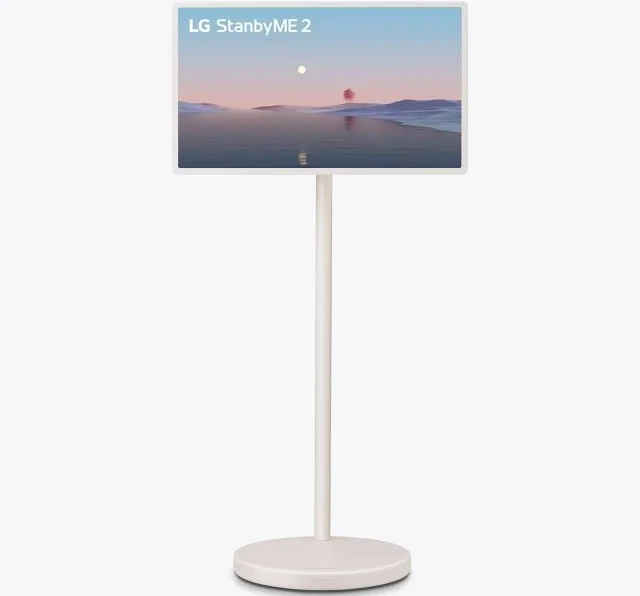
LG StanbyME 2 27" Portable Smart Touch Screen TV
Also stocked at: The Good Guys
On specification, a rollable, battery-powered screen like this is an indoor product used outdoors temporarily — not a weatherproof install. Bring it in before dew settles, keep it out of direct sun, and treat rain as a hard stop. Used that way it's genuinely handy for a small deck or courtyard where a wall-mounted TV would look absurd.
Projectors: Brilliant After Dark, Hopeless at 6pm in January
A projector is the cheapest path to a big outdoor picture, and in summer that comes with a catch: daylight saving means it isn't properly dark until close to 8:30pm in the southern states. If the kids' movie night starts at 6pm, a projector will disappoint you.
What to look for if you go this way:
- Real lumens, not "LED lumens". Marketing figures on cheap units are frequently inflated [VERIFY]. Cross-check against ANSI lumens where the manufacturer publishes them.
- A proper screen or a flat, light-coloured wall. Rendered brick with texture will soften the image noticeably.
- Insect management. A bright projector beam in an Australian summer is a moth magnet. Position the projector behind seating rather than in front of it, and consider a yellow-tinted outdoor light nearby to draw insects away.
- Storage. Projectors hate dust and humidity. Bring it inside, or house it in a ventilated, lockable enclosure.
Most portable projectors and outdoor speakers can run from a battery, which removes the temptation to string an extension lead across the lawn.
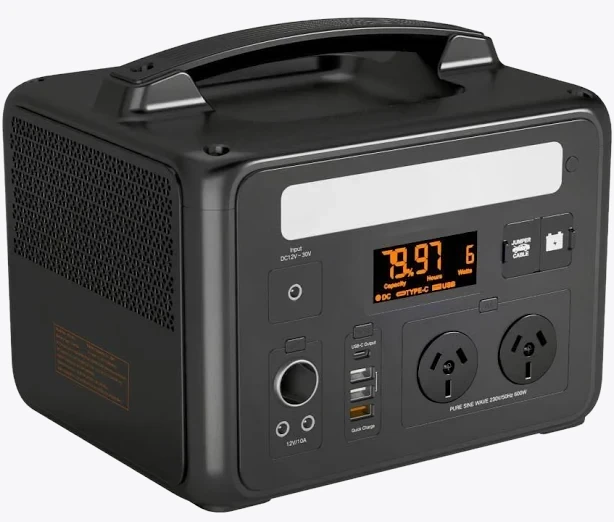
VoltX E600 Portable Power Station
Also stocked at: Woolworths
A power station in this class typically runs a projector, a couple of speakers and phone charging for an evening without drama [VERIFY capacity and output figures against the listing]. It also means no cable crossing a walkway — which is a real trip hazard, not a theoretical one.
Speakers: Weatherproof, Covered or Portable — Pick One
Outdoor audio splits three ways.
Permanently installed weatherproof speakers (eave-mounted or in-ground) sound the best and disappear visually, but need speaker cable run and an amplifier somewhere dry. Look for UV-stabilised housings and, if you're within a few kilometres of the coast, stainless or powder-coated hardware. Salt air will find any exposed steel screw.
Mains-powered smart speakers under a solid roof are a reasonable middle ground for a covered alfresco, provided they're genuinely protected from rain and you accept they're indoor products living slightly outside their brief.
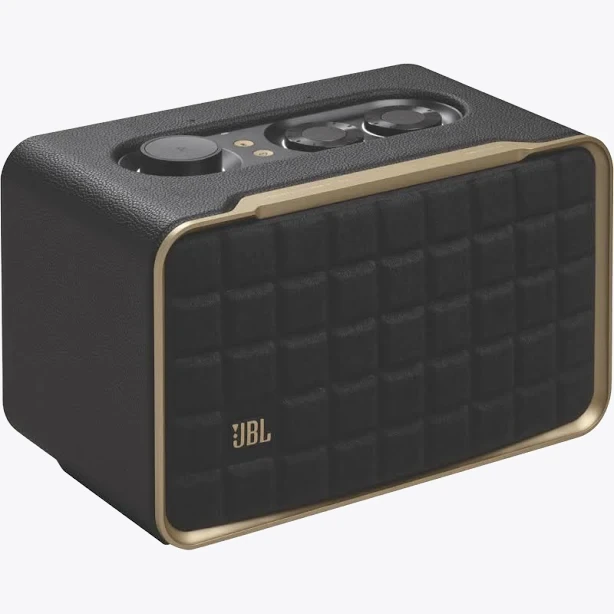
JBL Authentics 200 Smart Home Speaker
Also stocked at: JB Hi-Fi
This is an indoor speaker, so treat any alfresco placement as covered-only: under a solid roof, back from the edge, and unplugged and brought in before a storm. On specification it's a good fit for a covered outdoor kitchen where you want streaming and voice control rather than a party PA.
Portable Bluetooth speakers with a real IP rating remain the most sensible option for renters and anyone who moves furniture around. Nothing is permanently exposed, and there's no wiring.
One detail people miss: noise travels further outdoors at night, and residential noise limits vary by state and council [VERIFY your local rules]. Aim speakers inward toward the seating area rather than out toward the fence.
Power, Cabling and the Bits That Need an Electrician
This is the part to get right.
- New outdoor power outlets, hard-wired amplifiers or anything inside a wall or ceiling cavity must be installed by a licensed electrician. DIY fixed wiring is illegal for unlicensed people in every Australian state and territory [VERIFY current requirements in your state].
- Outdoor socket outlets need suitable weatherproof enclosures and RCD protection under AS/NZS 3000 [VERIFY the specific clauses with your electrician].
- Extension leads are a temporary measure, not an installation. If you're running one every weekend, that's the signal to have an outlet installed properly.
- Use outdoor-rated, UV-stable cable for any speaker runs, and route it away from where a whipper snipper will meet it.
- Renters: fixed installations generally need written landlord consent, and anything wired in still needs a licensed electrician [VERIFY your tenancy legislation].
Making It Last Past One Summer
Heat is the quiet killer. Black cabinets and enclosures in full sun cook the electronics inside, so ventilate any joinery you build around a screen or amp, and never seal a device into an airtight box.
A few habits that make a real difference:
- Fit a breathable cover to any fixed screen. Sealed vinyl covers trap condensation and can be worse than no cover.
- Rinse coastal installs with fresh water occasionally — a light hose-down of speaker grilles and mounting hardware slows salt corrosion.
- Bring portables inside. Dew alone is enough to kill a projector over a season.
- Check mounts and fixings once a year. Thermal cycling loosens things.
- Add a smart plug or powerboard indoors so you can cut power to the whole outdoor zone at night, which reduces standby draw and surge exposure during storm season.
Get the zone assessment right at the start and the rest follows. Covered alfresco with power already there? A portable screen or a covered smart speaker will serve you well for years. Exposed deck in full western sun? Budget properly for a purpose-built outdoor TV, or accept that a projector after dark is the smarter spend.


